Training Philosophy · 8 min read
How to Build Duration in Sit, Down, and Stay that Actually Works
By Ryan Loseke · CPDT-KA Certified Professional Dog Trainer ·
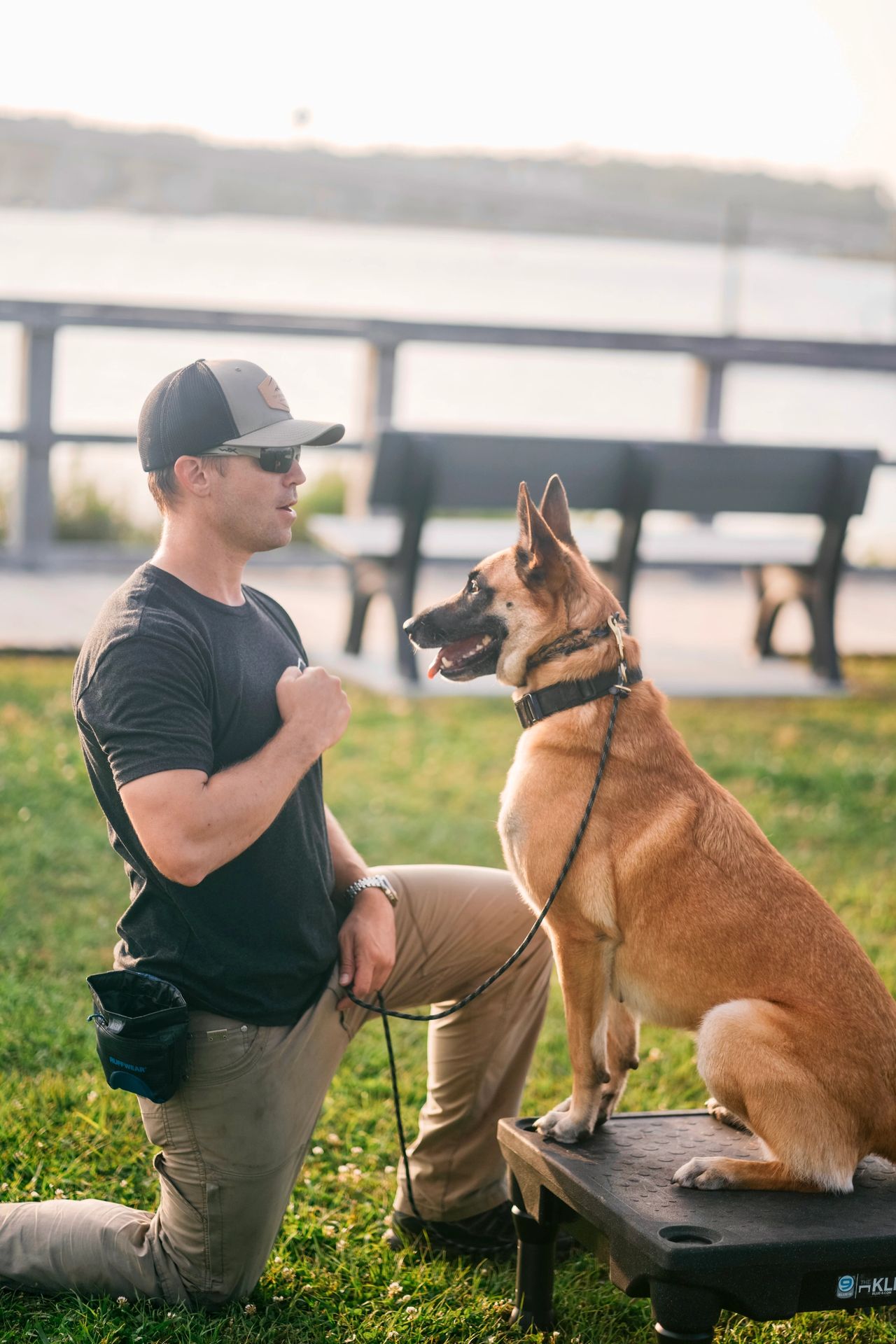
Sit, down, and stay are not party tricks. They are impulse control skills. When taught correctly, they create stability, patience, and emotional regulation. When taught poorly, they create frustration, repeated cues, and a dog that only listens when bribed.
Let’s break down how duration is built the right way, why most people accidentally sabotage it, and how to make obedience training actually hold up in your home, your neighborhood, and public places around Sneads Ferry, Hampstead, and Surf City.
What does duration mean in sit, down, and stay?
Duration means holding a position calmly until released, not just moving into a sit or down. Rear on the ground. Elbows on the floor. Dog not moving. That part is easy. The hard part is teaching the dog that holding the position calmly is the job.
Duration is not time on a stopwatch. Duration is the dog choosing stillness even when nothing exciting is happening. That is impulse control.
A dog that understands duration does not vibrate in place. They settle. You will see their hips relax. Their breathing slows. Their brain disengages from scanning the environment for the next reward.
That is the goal.
If your dog pops up early, creeps forward, or breaks the moment you shift your weight, that is not disobedience. It is a clarity problem.
How can I start teaching sit and down with a food lure?
Use a food lure to guide your dog smoothly into position without pushing or forcing them. Especially for puppies and young dogs, it is the fastest way to teach positions without pressure or confusion.
A food lure should guide the dog smoothly into position. No pushing. No forcing. No repeating the cue over and over like the dog suddenly forgot English.
Once the motion is clean and predictable, the verbal cue gets added. Not before. Some dogs are not highly food motivated. That does not mean they are untrainable. It means you shift strategies. Capturing natural behaviors or shaping with a marker system works extremely well for those dogs. When the dog offers a sit on their own, you mark it. When they lie down naturally, you mark it. You let the dog discover that their choices matter.
The key is patience. Rushing clarity always costs you later.
Marker Timing Is Where Most People Lose the Dog
Markers are not encouragement. They are information.
Your timing window is tight. One second is ideal. One and a half seconds is pushing it. Anything later and you are rewarding the wrong behavior.
A continuation marker like “yes” tells the dog they are correct and should remain in position. A terminal marker like “free” tells the dog the job is complete and they can move.
Here is where most owners mess this up. They mark too late. Or they talk instead of marking. Or they release without meaning to.
Your voice tone matters too. Calm and steady for continuation. Upbeat and clear for release. Dogs read tone faster than words.
If your dog looks confused, assume your timing is off. That is almost always the answer.
How Duration Is Actually Built Without Frustration
Duration should be built in small, deliberate pieces. Expecting a dog to hold a sit or down for a long stretch without reinforcement is unrealistic and unfair early on.
One effective approach is starting duration work on a place bed. The bed creates a clear boundary and gives the dog a comfortable target. You reward during the hold, not just at the end.
A simple rule works well. Multiple continuation markers before a release. This teaches the dog that staying put is valuable and predictable.
Rewards should be delivered calmly and placed directly to the dog, not waved around. Dropping a reward between the dog’s paws allows you to step away briefly while the dog stays engaged with the task.
If your dog fails, shorten the duration. Do not argue with the dog. Clarity beats pressure every time.
Distractions Should Be Boring Before They Are Hard
One of my favorite mistakes is what I call the “hundred dollar distraction problem.” People jump straight to big challenges when the dog only needed a small one.
You do not start duration training by throwing a tennis ball or having a kid sprint past the dog. You start by shifting your weight. Taking one step. Tapping your foot.
Movement is the hardest distraction for most dogs. It triggers attention and prey drive. That is normal.
Progress slowly. Stationary distractions first. Then slow movement. Then faster movement. One variable at a time. If your dog breaks, the distraction was too hard. Lower it and rebuild.
Common Duration Problems and How to Fix Them
Holding duration too long too soon is the most common mistake. Dogs fail when expectations outpace clarity.
Creeping is another big one. The dog slowly inches forward or slides out of position. This is not sneaky behavior. It is usually caused by inconsistent release patterns or slippery surfaces.
Use calm body pressure or light leash guidance to return the dog to the exact original position. Precision matters.
Dogs that break before being released are often guessing. Random release timing teaches dogs to gamble. Contact releases help. Touch the dog calmly before releasing them. It creates a clear end point and prevents self-releasing.
Train on non-slip surfaces whenever possible. Hardwood floors turn good dogs into accidental rule breakers.
Where Sit, Down, and Stay Matter in Real Life
Obedience training is not about showing off. It is about control in everyday situations.
Sit at doorways teaches patience and safety. Down during meals builds calmness around food. Holding a position while guests enter prevents chaos.
Duration is emotional regulation. A dog that can hold position can handle stimulation without losing their mind.
When dogs truly understand duration, they relax into the behavior. That is when obedience becomes reliable instead of fragile.
Simple Homework That Actually Works
Keep this boring. Boring is good. Practice a ten second hold in sit or down. Build slowly. Reward during the hold. Release cleanly.
Add light movement. Take two steps back. Return. Reward. If the dog fails, lower difficulty. That is not regression. That is training. Short, clean reps beat marathon sessions every time.
Why Professional Guidance Saves You Time and Frustration
Most obedience issues are not caused by bad dogs. They are caused by unclear systems.
A professional dog trainer can see timing errors, marker confusion, and expectation gaps immediately. That saves you months of frustration and your dog a lot of mixed messages.
If you are looking for obedience training in Sneads Ferry or searching for the best dog trainers in Hampstead or Surf City, structure matters more than style. You want clarity, fairness, and real-world reliability. There's a distinct reason we won the Topsail Top Choice Award for 'Best Dog Obedience Training Program' this past year in 2025.
If you want help building sit, down, and stay that actually work outside your living room, schedule an evaluation or a consult. No pressure. No sales gimmicks. Just an honest assessment and a clear plan.
Your dog wants clarity. We help you provide it.
About the author
Ryan Loseke is a CPDT-KA Certified Professional Dog Trainer (verify with the CCPDT) and the founder of Pawprint Academy, creator of the TOP Framework™ (Trust. Obey. Perform.).
Not sure where to start with your dog? Take the free 2-minute training quiz or book a 1-on-1 consult with a certified trainer.