Problem Solving · 10 min read
How to Use the Place Command to Solve Chaos in the Home.
By Ryan Loseke · CPDT-KA Certified Professional Dog Trainer ·
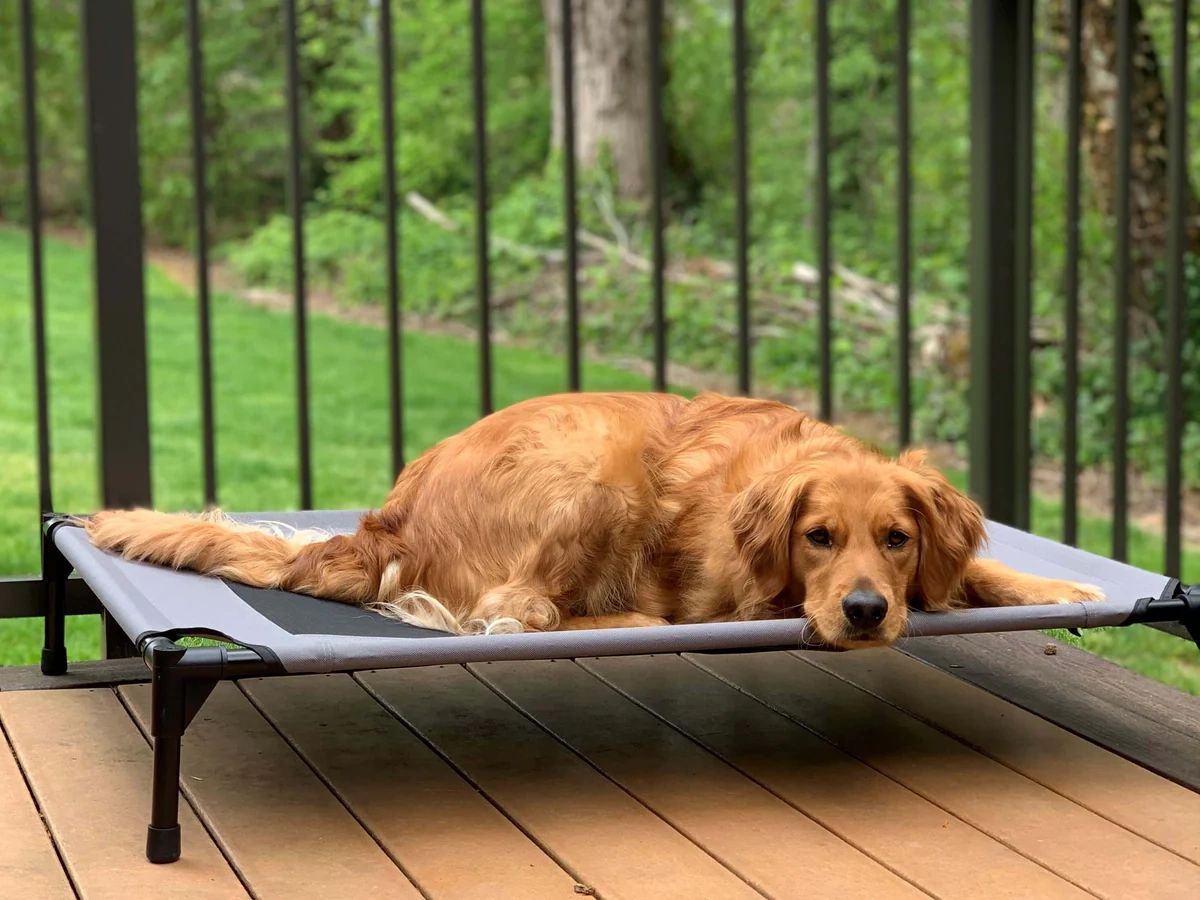
The Place command fixes this because it gives the dog a defined role during moments that normally create chaos. Place is not about confinement or punishment. It is about teaching your dog how to be calm, neutral, and independent in a busy environment.
This is one of the most valuable skills you can teach a family dog, especially in a household with kids, visitors, or unpredictable schedules.
Why do unclear household rules create problems?
Unclear household rules leave dogs uncertain about what to do. High energy is not the only reason a home feels chaotic. Inside most homes, dogs are allowed to free roam with no expectations until something goes wrong. Then the dog is suddenly corrected or yelled at without ever being taught an alternative behavior.
From the dog’s perspective, the rules change constantly.
Sometimes following you is allowed. Sometimes it is annoying. Sometimes jumping is cute. Sometimes it is punished. Sometimes barking works. Sometimes it does not.
That inconsistency creates arousal and confusion. Dogs fill the gap with motion and noise.
The Place command solves this by removing the guesswork. When the dog hears “Place,” there is no decision to make. Go to the bed. Stay there. Relax. Wait to be released.
Clarity reduces anxiety. Structure creates calm.
What does the place command teach a dog?
The place command teaches a dog to settle in a designated spot, practice impulse control, and remain calm without joining every activity. That is surface level. What Place actually teaches is impulse control and emotional regulation.
When done correctly, the dog learns how to turn off their own movement. They learn that calm behavior is valuable. They learn that not being involved in everything is safe.
This is why Place works so well for dogs that struggle with overexcitement, demand behaviors, and constant engagement seeking.
It is also why Place is one of the first skills we teach in our dog training programs in Sneads Ferry and Surf City. It scales into almost every real world scenario.
Meals. Guests. Doorways. Kids playing. Evening wind down. All of it improves once the dog understands how to disengage.
Why an Elevated Dog Place Bed Matters
You can technically teach Place on a mat or towel, but an elevated dog place bed creates faster understanding and cleaner results.
Elevation adds a physical boundary. Dogs are spatial learners. When the surface changes under their feet, the job becomes clearer. Four paws on the bed means you are right. Stepping off means you are wrong.
This removes ambiguity, especially for family dogs that are still learning structure.
An elevated place bed also discourages creeping, rolling, and wandering. It naturally promotes stillness without force.
This is not about comfort. It is about clarity.
How the Place Command Builds a Calm Dog
The biggest mistake owners make is trying to calm their dog emotionally. Talking, soothing, repeating cues, or petting an amped dog only adds energy.
Calmness is a behavior. Behaviors must be taught.
Place teaches calm by asking the dog to hold a position while the world continues around them. Over time, the dog learns that nothing bad happens when they are not involved. The nervous system downshifts. The dog learns to self regulate.
This is how you teach a dog to relax instead of constantly trying to manage excitement.
It does demonstrate that you are in control of the environment. That leadership matters. Dogs relax when they trust that someone else is handling things.
Using Place During Everyday Household Chaos
Place should not live in a quiet corner during training only. It should be integrated into daily life.
Use Place during meal prep instead of fighting counter surfing. Use Place when guests arrive instead of wrestling with greetings. Use Place when kids are playing instead of correcting over and over.
The goal is not perfection. The goal is repetition under normal conditions.
Short successful holds are more valuable than long failed ones. Build duration slowly. Build distance separately. Build distraction last.
When Place is used correctly, the dog begins to default to calm without being asked. That is real progress.
Common Mistakes That Break the Place Command
Most Place problems are human problems.
Talking too much is a big one. Repeating the cue teaches the dog that the first one does not matter.
Releasing with excitement is another. If the release is chaotic, the dog will anticipate it and struggle to stay calm.
Allowing the dog to break Place without consequence erodes the boundary. If Place is optional, it will not hold when you need it most.
Finally, rushing difficulty is a mistake. Expecting long duration with guests before the dog can handle calm Place at home is unrealistic. Progress must be earned.
What Success Should Look Like
A successful Place command does not look dramatic. It looks boring.
The dog walks to the bed calmly. They lie down or stand quietly. Their breathing slows. Their eyes soften. They stop tracking every movement. That neutrality is the goal.
If your dog can hold Place calmly for a few minutes while normal household activity happens, you are on the right track. From there, everything becomes easier.
When to Get Professional Dog Training Help
If your dog cannot disengage at all, breaks Place instantly, or becomes frantic when asked to stay still, that does not mean they are stubborn. It means the foundation is missing.
Professional dog training helps ensure that the Place command is taught fairly, clearly, and without creating frustration. It also ensures that corrections, when needed, are used as communication, not punishment.
For family dog owners in Sneads Ferry and Surf City, this is often the turning point. Once Place is solid, the entire household dynamic improves.
The dog is calmer. The humans are calmer. The relationship gets better.
That is not an accident. It is structure.
About the author
Ryan Loseke is a CPDT-KA Certified Professional Dog Trainer (verify with the CCPDT) and the founder of Pawprint Academy, creator of the TOP Framework™ (Trust. Obey. Perform.).
Not sure where to start with your dog? Take the free 2-minute training quiz or book a 1-on-1 consult with a certified trainer.